
Invisalign Clear Aligners in Singapore
Invisalign straightens teeth with a series of clear removable aligners, changed every one to two weeks. Treatment at our Millenia Walk clinic starts with a 3D scan and a staged plan you see before you commit, and typically runs six to eighteen months depending on how far the teeth have to move.
- Duration
- 6–18 months
- Visits
- Every 6–10 weeks
- Wear
- 20–22 hrs/day
- Fee
- S$5,450 – 10,900


The most conservative way to change how teeth look
If the complaint is that teeth are crooked, there are two ways to answer it. You can move them, or you can cover them. Moving them keeps the tooth; covering them usually means removing a permanent layer of enamel first so the veneer sits flush.
That is the whole argument for orthodontics as the conservative option, and it is why we raise it before a cosmetic plan rather than after. Aligners work with the teeth you have. Enamel does not grow back, and a tooth prepared for porcelain needs a veneer or crown from then on — which is a reasonable trade for a damaged tooth and a poor one for a healthy tooth in the wrong position.
Aligners usually remove no tooth structure at all. Where space is genuinely needed, a fraction of a millimetre is polished between teeth, and only where the alternative is taking a tooth out. We say so before it happens.
What straightening changes besides the look
What you are able to clean. Crowded and overlapping teeth trap plaque in places a brush and floss cannot reach. Alignment does not replace cleaning, but it decides how much of your mouth cleaning can actually reach, which is why gum health is assessed before treatment starts and again during it.
How the bite distributes load. A bite that loads a few teeth heavily concentrates wear, chipping and recession on those teeth. Spreading that load is one of the reasons to treat an adult who is not especially bothered by appearance.
Nothing metal on the teeth. The aligners are clear plastic and the attachments are tooth-coloured composite. Fixed braces use metal brackets and wire.
No impression putty. Everything starts from a digital scan, which matters more than it sounds if you gag easily.
None of that makes aligners right for every case. Complex skeletal problems need more than an aligner can do, and we will say so rather than take on a case that wants something else.
What happens
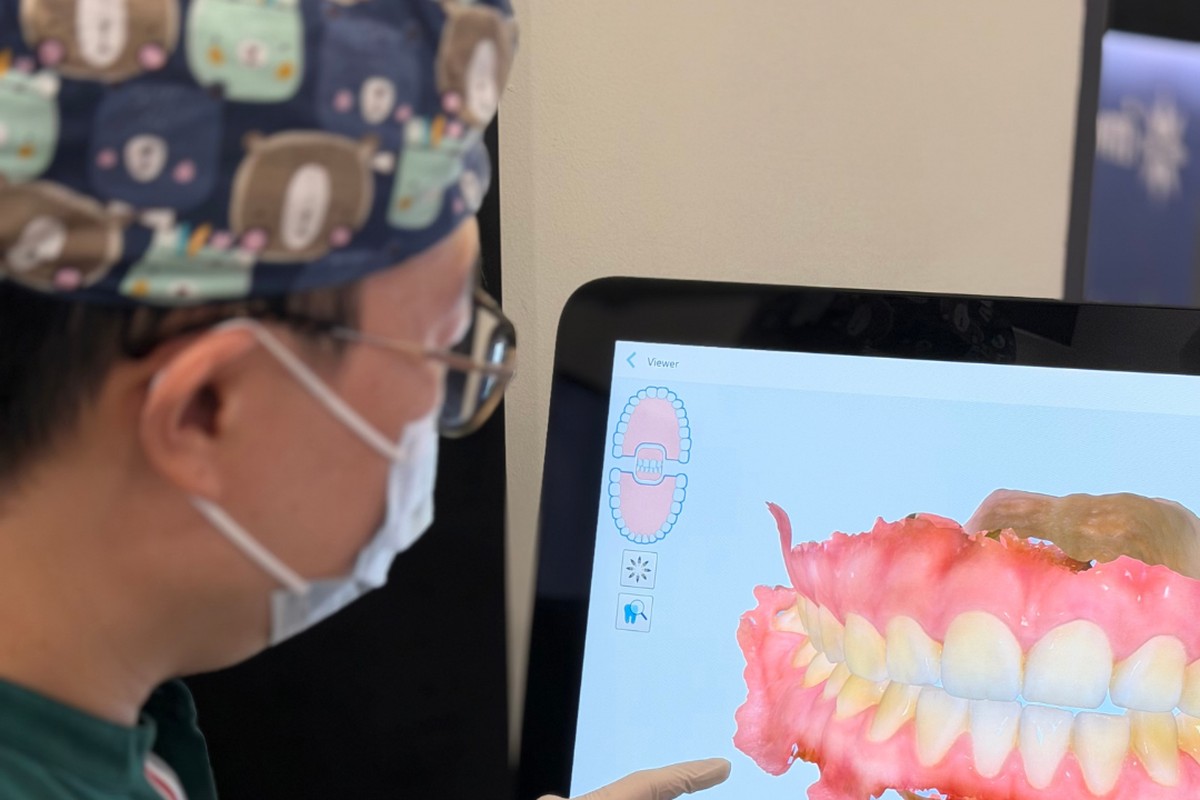
A digital scan with the Lumina scanner, plus photographs and records. No impression putty.
A staged treatment plan is prepared and shown to you on screen — you see the projected finish before starting.
Aligners are worn 20 to 22 hours a day and changed on schedule. Attachments may be bonded to some teeth to help specific movements.
Progress is reviewed in clinic every six to ten weeks, and remotely in between.
Retainers at the end. Teeth move back without them, so this part is not optional.
Aligners are removable, which is their advantage and their difficulty: nothing is stuck to your teeth, but the result depends almost entirely on how many hours a day they are actually worn. Twenty hours works. Fourteen does not, and adds months.
Straighter teeth are also easier to clean. Crowded and overlapping teeth trap plaque in places floss does not reach, which is why we assess gum health before starting and again during treatment.
Who does this at Calm Dental
Fees for this treatment are on our fees page, including GST. A written quotation follows examination.
Questions
How much does Invisalign cost in Singapore?
At Calm Dental full treatment is S$5,450 to S$10,900 including GST, covering the scan, the aligners, refinements and the first set of retainers. The range is wide because cases differ a great deal. Limited treatment for the front teeth only is less, where it is clinically suitable. The full schedule is on our fees page.
Is Invisalign better for my teeth than veneers?
For a complaint about position, yes, and it is not a close call. Aligners move the teeth you already have. Veneers change how they look by covering them, and porcelain veneers usually require a permanent amount of enamel to be removed first. Where teeth are crooked rather than damaged or discoloured, moving them keeps the tooth intact. Where a tooth is broken down or deeply stained, a veneer or onlay is the right tool and aligners will not help.
Does Invisalign remove any enamel?
Usually none at all. In some cases a small amount is polished between the teeth to create space, which is measured in fractions of a millimetre and done only where the alternative is extracting a tooth. That is a different order of magnitude from preparing teeth for veneers or crowns, and we will tell you before it is done, not afterwards.
Does straightening do anything for my health, or is it cosmetic?
Both, and the health half is the part people underrate. Crowded and overlapping teeth trap plaque where a brush and floss do not reach, so alignment changes what you are able to clean. A bite that loads a few teeth heavily concentrates wear, cracking and recession on those teeth. We assess gum health before starting and again during treatment for that reason.
Is Invisalign metal-free?
The aligners are clear plastic and the attachments bonded to some teeth are tooth-coloured composite, so no metal goes on the teeth. Fixed braces use metal brackets and wire. If avoiding metal matters to you, say so and it will be taken into account when the options are set out.
Does Invisalign hurt?
The first two or three days in each new aligner feel tight and the teeth can be tender to bite on. It settles. Most people find it more comfortable than fixed braces, because there is nothing sharp and nothing to tighten.
Can I use MediSave for Invisalign?
No. MediSave does not cover orthodontic treatment. It applies to surgical procedures such as wisdom-tooth removal and implant placement.
Will I need retainers forever?
You will need them indefinitely, at reducing frequency — nightly at first, then a few nights a week. Teeth drift throughout life whether or not they have been treated, so retainers maintain a result rather than compensate for one.