
The One-Day Philosophy
A great deal of dentistry is slow for reasons that have nothing to do with your tooth: an impression posted to a laboratory, a fortnight in a temporary crown, a second appointment and a second injection. Scanning and milling the ceramic here removes that waiting entirely. A ceramic onlay, crown or veneer is designed and bonded in about two hours, in one appointment. What it does not mean is compressing treatment that genuinely needs staging — and we will tell you which yours is.
Why one visit is better dentistry, not just a faster one
The convenience is the obvious part, and the least interesting. The clinical case is stronger.
- No temporary. A temporary crown is held on with deliberately weak cement so it can come off again. In the meantime it can leak, debond while you eat, and leave the prepared tooth sensitive. Two weeks of that disappears.
- One anaesthetic, one preparation. The tooth is numbed once and prepared once. Nothing is re-opened a fortnight later.
- Bonded to a fresh surface. Adhesive dentistry works best on a freshly cut surface. Ceramic bonded the same hour is bonded to dentine that has not spent two weeks contaminated under a temporary — which is the part that matters for an onlay, where the bond is doing the structural work.
- The design is checked in your mouth, not posted back. If the bite needs adjusting, it is adjusted while you are sitting there, against your own scan.

What actually finishes in one appointment
This is the honest list, rather than the marketing one.
- Ceramic onlays and crowns — scanned, designed, milled and bonded, about two hours.
- Composite veneers, built up directly. Porcelain veneers take two visits.
- Composite fillings, and replacing an amalgam filling with ceramic or composite.
- Regular extractions, and most wisdom teeth.
- Tongue-tie and lip-tie release, once the assessment says a release is worth doing.
- Most emergencies — at minimum the pain settled and the diagnosis made, often the definitive repair too.
What takes longer, and why
Some treatment takes months because the biology takes months. No scanner changes that, and the result matters more than the schedule.
- Implants need three to six months for bone to integrate with the fixture. The surgery is one appointment; the treatment is not.
- Invisalign and braces move teeth through bone, which happens at the speed it happens.
- Gum treatment is measured, treated and re-measured, because the response is the diagnosis.
- Full-mouth rehabilitation is deliberately staged, and can take up to six to twelve months, with a provisional stage worn and tested before anything permanent is made.
- A tooth needing a root canal before its crown, or a gum margin that has to settle before an accurate one can be taken.
A same-day crown is a means, not a target. The point of milling here is that we can finish in a day when finishing in a day is the right dentistry — and that we are not under any pressure to pretend it is when it is not. If your tooth needs the bite tested in a provisional first, you will be told that, and it will take longer.
The equipment behind it
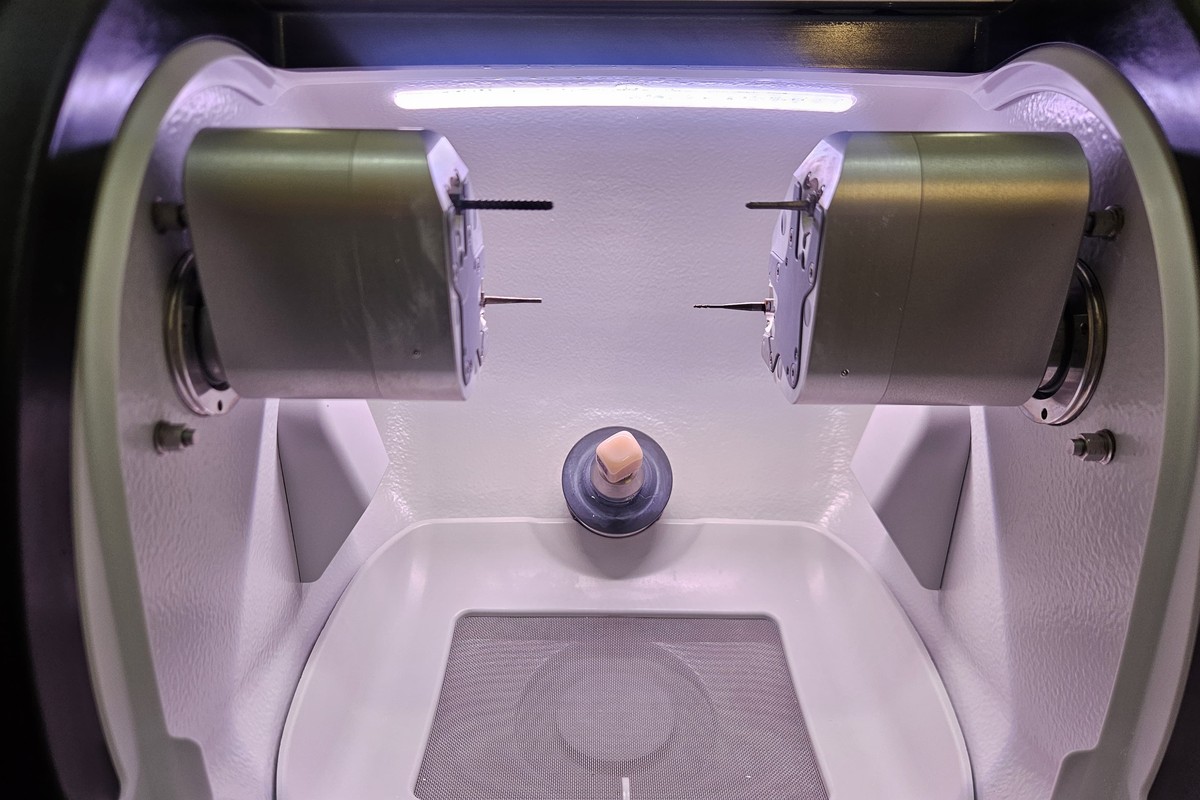
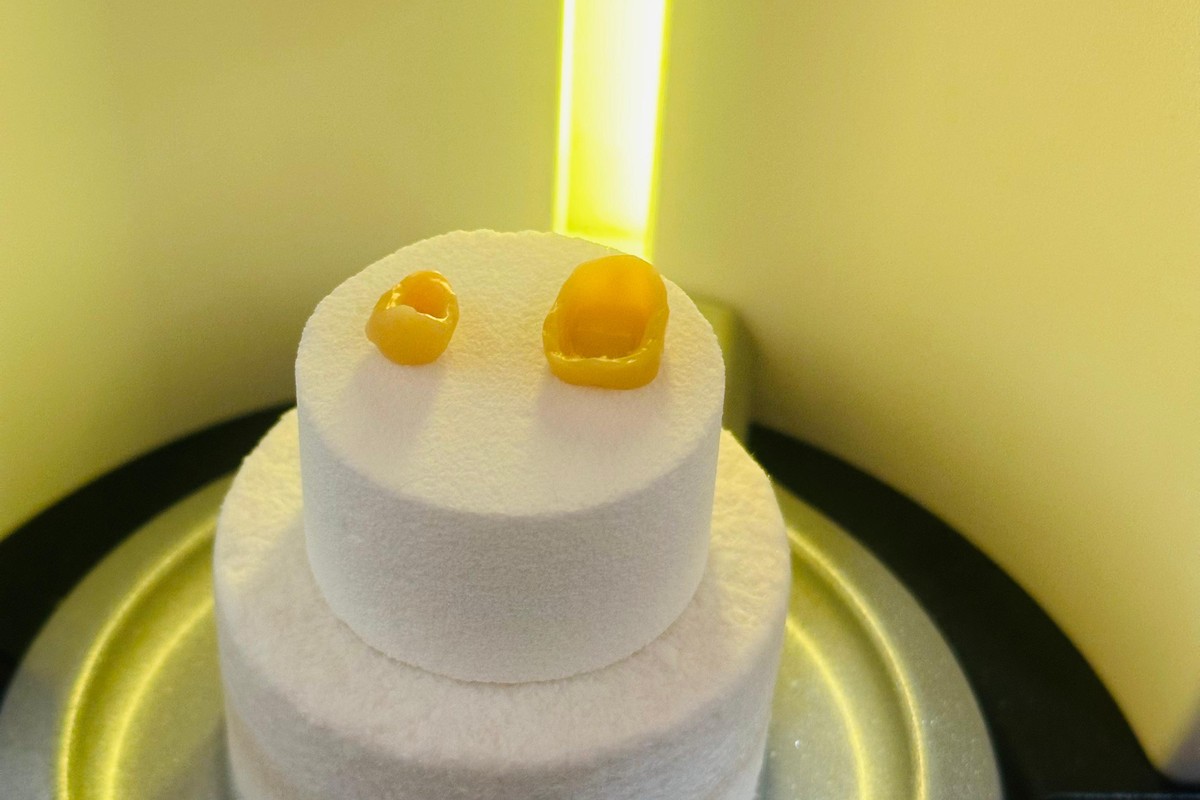
Scanning, design and milling all happen at Millenia Walk on the CEREC system: a Primescan intraoral scanner instead of impression putty, the restoration designed on screen against your own scan, and the ceramic milled in the clinic while you wait. The blocks are German and Japanese ceramics. Nothing is posted anywhere, so there is no laboratory queue to wait in.
The same scan does a second job. Kept and compared with one taken a year later, it turns wear into a measurement rather than an impression — which is how an old problem is told apart from an active one.
Questions
Can a crown really be done in one day?
Yes, in most cases. The tooth is scanned, the ceramic is designed and milled in the clinic, and it is bonded the same appointment — usually about two hours from start to finish. There is no putty impression, no temporary crown and no second injection. Where a tooth needs a root canal first, or the gum needs to settle before an accurate margin can be taken, it becomes two visits and we say so before we start.
What can you finish in a single appointment?
A ceramic onlay or crown, a composite veneer, a composite filling, replacing an amalgam filling, a simple extraction, a tongue-tie release, and settling most dental emergencies. Whitening trays and porcelain veneers need a second visit; implants, orthodontics, full-mouth rehabilitation and gum treatment are staged over months by design.
Is a same-day crown as good as a laboratory one?
For most teeth, yes — and for a bonded restoration there is an argument it is better, because the ceramic is bonded to a freshly prepared surface rather than one that has spent two weeks under a temporary. A laboratory still has the edge on complex multi-tooth aesthetic cases, and where that is true we use one and tell you why.
Why does avoiding a temporary crown matter?
A temporary is glued on with weak cement so it can be removed later. It can leak, come off while you eat, and lets the prepared tooth pick up sensitivity. Finishing in one visit removes that fortnight entirely, along with the second appointment and the second anaesthetic.
Do you ever refuse to do it in one visit?
Yes. One visit is a means, not a target. If a tooth needs the bite tested in a provisional first, if there is active gum inflammation at the margin, or if the case is a rebuild rather than a single tooth, compressing it into a day makes the result worse. We will tell you that rather than sell you the convenience.